

πŸ“‘ Precision GNSS β€” The independent knowledge platform for RTK technology professionals. Explore applications β†’
GNSS / RTK Knowledge Platform

Everything You Need
to Know About Centimeter GNSS

Precision GNSS is the independent technical reference for Real Time Kinematic (RTK) positioning technology. Explore applications, hardware guides, and use-case deep-dives β€” written for engineers, researchers, and precision technology professionals working with GNSS/RTK systems.

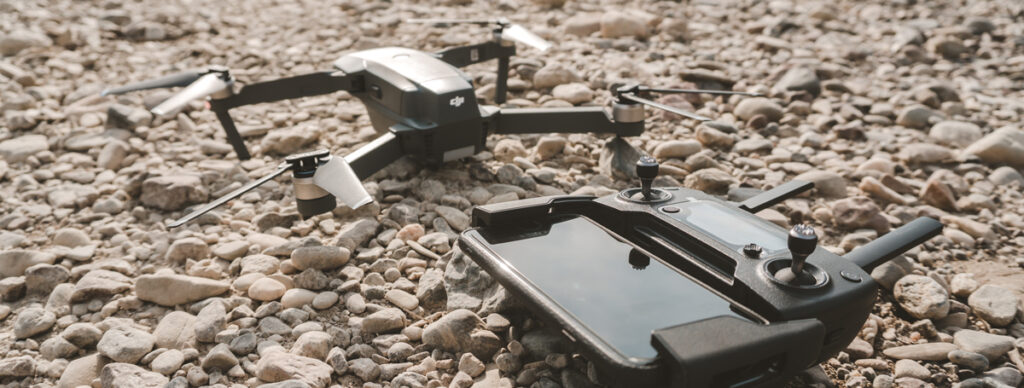
ZED-X20D vs UM982 vs mosaic-G5: Best RTK Dual-Antenna for Drones 2026
Featured
News

ZED-X20D vs UM982 vs mosaic-G5: Best RTK Dual-Antenna for Drones 2026

Are you developing a drone and not sure which RTK module is best for your project? Here is a side-by-side comparison of the three recommended dual-antenna modules. All...

Read the guide β€Ί
1 cm
Horizontal Accuracy
9+
Industry Verticals
8+
Years of Experience
56+
RTK kits tested

Latest Precision GNSS news

Technical publications, product updates, and field insights for professional high-accuracy positioning teams.

Subscribe to the Precision GNSS newsletter

Get technical implementation tips, and new field-proven workflows delivered to your inbox for high-accuracy positioning teams.

Frequently asked questions about Precision GNSS

How to choose RTK Receiver for precise centimeter accurate GPS position?
Choose an RTK receiver based on your use case: simple, ready-to-use solutions are best for quick deployment, while higher-end receivers offer better reliability and performance in challenging environments. If you are integrating into your own hardware (robot, drone, PCB), focus on compact form factor, interfaces, and power requirements. Always compare key specs like supported GNSS constellations, update rate, and correction capabilities to match your accuracy needs.
How to choose GNSS Antenna?
Choose a GNSS antenna carefully, as it directly affects accuracy and reliabilityβ€” even the best RTK receiver will perform poorly with a low-quality antenna. Select based on your use case: lightweight antennas for drones and mobile setups, and higher-quality survey antennas for best accuracy and stability. Compare key factors like supported frequencies (multi-band), size, and build quality to match your performance and installation needs.
How to choose RTK starter kits?
An RTK starter kit is a ready-to-use solution that includes all required components, making it the fastest way to achieve centimeter-level positioning without worrying about compatibility. Choose based on your setup: use internet-based kits with NTRIP for cost-effective solutions, base + rover kits for remote areas without connectivity, or dual-antenna kits if you need heading and orientation. If your project has specific requirements, consider configurable kits to match your exact technical needs..
What correction sources are compatible with RTK GNSS receivers?
RTK receivers support corrections via RTCM3 over multiple channels: NTRIP service, local RTK base station, or or SSR correction services. IF you need help choosing one, feel free to cointact us. We have prepared a list of correction services available in your country.
What accuracy can I expect from RTK GNSS in practice?
Under good open-sky conditions with a nearby base station (under 30 km baseline), RTK Fixed typically delivers 1–2 cm horizontal and 2–3 cm vertical accuracy. Performance can degrade near obstructions, in multipath-rich environments, or with large base-rover distances.

Plan your precision positioning strategy with our technical team

Share your operational goals and deployment context. We will help map the right GNSS approach for your workflows, implementation phases, and long-term performance objectives.

Technology

How Real Time Kinematic
GNSS Actually Works

RTK (Real-Time Kinematic) is a technique that improves standard GNSS positioning from meter-level accuracy down to centimeters. It works by analyzing satellite signals much more precisely, focusing on the carrier phase measurements instead of just basic position data. By comparing these signals and resolving their small differences, RTK can determine position with extremely high precision.

01

Standard GPS vs RTK

Standard GNSS provides 1–10 meter accuracy due to common signal errors, which RTK can correct because nearby receivers experience similar errors.

02

Base and Rover concept

RTK uses a fixed base station to calculate signal errors and send corrections to a moving rover for precise positioning.

03

RTK corrections (RTCM)

The base sends real-time correction data (RTCM) to the rover, allowing it to achieve centimeter-level accuracy within a limited distance.

04

How corrections are delivered

Corrections are transmitted via cable, radio, or internet (NTRIP), enabling flexible setups from local links to global networks.

Standard GPS
RTK GNSS
βœ— 2–5 m accuracy
βœ“ 1–2 cm accuracy
βœ— No corrections
βœ“ Real-time RTK corrections
βœ— Poor repeatability
βœ“ Repeatable <2 cm
βœ— Basic position calculation
βœ“ Advanced position calculaltion
βœ— Typicaly used in navigation, smartphones, cars
βœ“ Often used in surveying, mapping, robotics, drones

Supported GNSS Constellations

πŸ‡ΊπŸ‡Έ
GPS
United States
πŸ‡·πŸ‡Ί
GLONASS
Russia
πŸ‡ͺπŸ‡Ί
Galileo
European Union
πŸ‡¨πŸ‡³
BeiDou
China
Getting Started

Your First RTK Setup, Step by Step

Whether you're a developer prototyping a new product or a field engineer deploying a production system, setting up centimeter-accurate RTK positioning is more accessible than ever.

01

Choose the Right Hardware

Select an RTK receiver for your use case: a two-board development kit for prototyping, a compact module for drone integration, or a ruggedized unit for field operations. Key parameters: antenna frequency bands (L1 vs L1/L2), output interfaces (UART, USB, CAN), and form factor.

02

Set Up Your Correction Source

Choose between a local base station (best for baselines under 10–30 km), an NTRIP caster connected to a public or commercial network, or a LoRa/UHF radio link for remote field deployments without internet access. Each option has different latency, coverage, and cost trade-offs.

03

Configure the RTCM3 Correction Flow

Configure the base to output RTCM3 messages: 1005 (base position), 1077/1087/1097/1127 (MSM observations for GPS/GLONASS/Galileo/BeiDou). Verify the correction link latency β€” correction age should remain below 2 seconds for optimal RTK Fixed performance.

04

Verify Fix Status and Integrate

Confirm RTK Fixed status in NMEA GGA sentence (quality indicator = 4). Parse position output at your required update rate (up to 20 Hz). Integrate via NMEA 0183, proprietary binary protocol, or a middleware framework such as ROS2 for robotics applications.

Recommended Hardware

RTK Starter Kits

Complete base + rover sets including everything for your first centimeter fix β€” receiver boards, survey antennas, cables, and factory-configured firmware for RTK operation out of the box.

Browse Starter Kits β€Ί

πŸ’‘ Pro Tips for First Deployment

β†’Place the base antenna with unobstructed sky view above 10Β° elevation. Even a single blocked satellite can delay fix acquisition significantly.
β†’Use a metallic ground plane (β‰₯30 cm diameter) under the base antenna to minimize multipath reflections and improve phase center stability.
β†’Keep base-rover separation under 30 km for reliable RTK Fixed with L1-only hardware. For longer baselines, use dual-frequency (L1/L2) receivers.
β†’Monitor correction age (GGA field 7) in your live NMEA stream. Correction age >5 s consistently indicates a link issue β€” troubleshoot the communication path before the receiver configuration.
Resources

Everything You Need to Go Further

πŸ“‘

RTK Receiver

Compact, high-performance RTK GNSS receivers for drone payloads, robotics, field survey, and embedded integration across all budgets and form factors.

Browse RTK receivers β€Ί
πŸ”Œ

GNSS RTK Antenna

Survey-grade GNSS antennas from compact helical stick antennas for UAV integration to high-gain ground-plane antennas for fixed base station deployment.

Browse RTK antennas β€Ί
πŸ“š

Tutorials & Setup Guides

Step-by-step hardware setup, firmware configuration, and integration tutorials for RTK receivers across survey, robotics, agriculture, and drone use cases.

Read RTK tutorials β€Ί
☁️

RTK Correction Services

Cloud-based NTRIP correction network services for rover-only deployments β€” no local base station required. Global and regional coverage with low-latency correction streaming.

Explore RTK services β€Ί
Start Building with RTK GNSS

Your Application.
Centimeter-Level Accurate.

From your first prototype to production deployment, the hardware and knowledge you need to build precision positioning solutions is here β€” accessible, well-documented, and field-proven across dozens of industries.