
In simple terms, RTK is the difference between “close enough” and actually getting it right.
While a normal GPS will get you down the road, RTK keeps your tractor on a line with just one centimetre of accuracy.
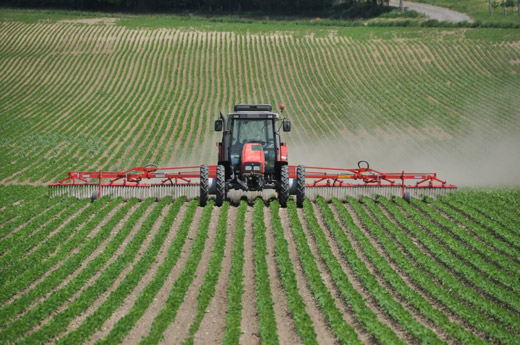
That precision means you stop wasting fuel and chemicals on overlaps. You can run the exact same tracks year after year without compacting the soil or crushing young crops — especially when you’re doing delicate jobs like weeding between rows.
But honestly, the biggest difference isn’t just the numbers on the spec sheet.
When you combine RTK with auto-steer, the tractor drives itself and you can finally pay attention to what’s happening behind you. No more staring at the hood for hours trying to keep a straight line. You finish the job faster, burn less diesel, and — best of all — you get home at the end of the day feeling way less wrecked.
If you’re still steering by hand, chances are you’re overlapping your passes by somewhere between 6% and 9%. It doesn’t look like much, but it’s quietly eating into your fuel, seeds, and fertilizer every single season.
Switching to GNSS RTK changes that completely. It brings the error down to just 0.5% — basically a razor-thin line. And it’s not only about driving straight: the system keeps your tractor or combine locked onto a precise 1 cm path, even when you’re doing curves or working in circles.
So why make the switch now?
At the end of the day, it’s about more than just driving the field — it’s about mapping it properly. Whether you’re fertilizing, seeding, or weeding, that 1 cm accuracy means you never miss a spot and never double up on the same row.
Article: Accuracy of Gps and Rtk Navigation and Their Impact on Reducing Overlaps
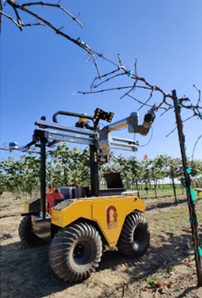
By combining GNSS RTK with vision-based algorithms, autonomous machines are taking a big step forward. They can now build detailed, high-quality 3D maps of unknown areas in real time — whether it’s the inside of a complex factory or the messy layout of a vineyard. This gives them the spatial awareness they need to work with real autonomy.
It’s not just about creating a nice 3D model. It’s about giving robots the ability to perform precise, intelligent tasks in the real world.
When a robot models a grapevine down to 1 cm accuracy, it doesn’t just “see” the plant — it knows exactly where to prune without damaging the vine.
In short, combining vision systems with RTK turns a simple moving machine into a smart, precision tool. It’s what takes a robot from just wandering around to actually getting the job done properly.
Fully autonomous robotic vine pruning mainly consists of navigation system mounted on the vehicle, wheel encoders, and the robot’s (InertialMeasurement Unit) were the main localization sensors in the navigation system), 7-DoF Manipulation system, system of vine perception and End-effector.
To get the most out of every bag of fertilizer, you need to know exactly what’s happening inside your crop — not just from above, but through the entire vertical structure of the plant.
By mounting LiDAR scanners on drones or ground robots, we can now map biomass and nitrogen uptake with impressive detail.
The catch? A 3D map is useless if it’s off by even a few meters. That’s where RTK receivers and antennas come in. They provide the centimeter-level accuracy needed to pin every LiDAR point exactly where it belongs in the real world.
Here’s why this matters for your bottom line:
By combining the “vision” of LiDAR with the precise “location” of RTK, you stop guessing and start knowing. It’s the difference between just looking at a field and truly understanding its real potential.
Read more: 🔗LiDAR Isn’t Enough for Navigation: You Need GNSS & RTK Too
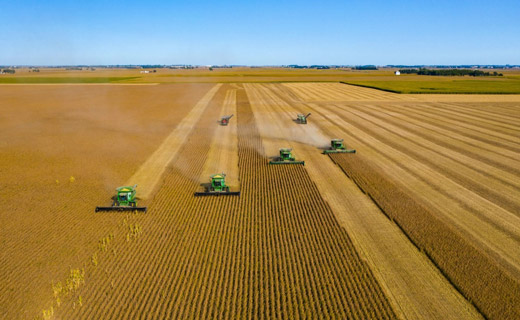
The jump from traditional farming to a genuinely profitable operation often starts with precision.
Today, GNSS RTK technology can be added to almost any piece of farm equipment — tractors, sprayers, combines, you name it. It turns ordinary machines into high-precision tools. With 1 cm accuracy, you’re not just steering straighter; you’re protecting your margins and making every pass count.
Here’s why RTK has become the backbone of modern farms:
In short, RTK takes the guesswork out of field work. It lowers your input costs, protects your crops and soil, and gives you back something priceless: time. When the satellites handle the precise positioning, you’re free to focus on the bigger decisions that actually move your farm forward.
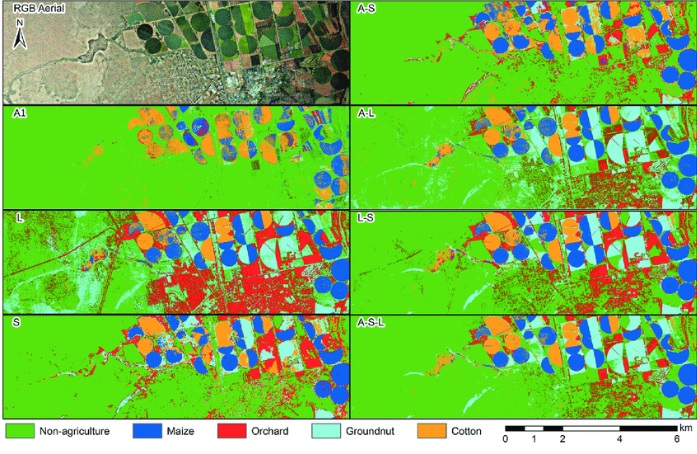
In the real world, fields are rarely perfect squares. They have irregular shapes, slopes, dips, and all kinds of surprises. While standard GPS often falls short in these conditions, RTK changes the game completely.
It lets you map the actual contours of your land with real precision, creating a high-resolution digital version of your field that understands every rise, fall, and curve.
Beyond Simple Steering
RTK isn’t just about driving straight lines — it’s about properly “tagging” the reality of your field. With 1 cm accuracy, you can build a detailed map that captures the specific challenges hiding in your land:
In short, RTK turns your field from a vague patch of land into a smart, detailed database. Whether you’re working on a steep slope or avoiding a wet spot, you’re operating with a map that’s accurate to the centimetre — so every pass is safer and every input actually makes sense.
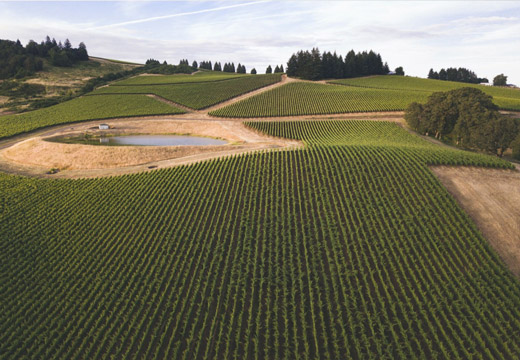
In regions where land is scarce and crop rotation is no longer a viable luxury—common across Europe, Asia, and global greenhouse operations—grafting has become a survival strategy. While mechanically-assisted grafting has been around for years, the shift toward fully robotic grafting is a response to the extreme precision required to handle delicate seedlings.
Solving the Human Margin of Error
Grafting is a high-stakes surgical procedure for plants. Robotic systems bring a level of consistency that manual labor simply cannot match, especially for sensitive crops like cucumbers and watermelons.
Eliminating Vulnerability: Young seedlings are incredibly tender. Robots use calibrated pressure and surgical-grade precision to join the scion and rootstock, drastically reducing the “shock” and mortality rate often seen with human handling.
Overcoming Inconsistency: No two seedlings grow exactly the same. Advanced robotics use vision sensors and 1cm-accurate positioning to adjust the cut on the fly, ensuring a perfect vascular match every time, regardless of minor stem variations.
Intensive Land Use: Because these robots work 24/7 with zero fatigue, they allow greenhouses to keep up with the relentless pace of intensive cultivation. When you can’t rotate your fields, you have to ensure every single plant you put in the ground is a high-performer.
By moving from mechanical assistance to full robotics, growers are effectively industrializing the most delicate part of the plant’s lifecycle. It’s about turning a fragile biological process into a repeatable, high-output system that thrives even when the land is pushed to its limits.
Read more: 🔗 Robotic Grafting in Vegetable Crops
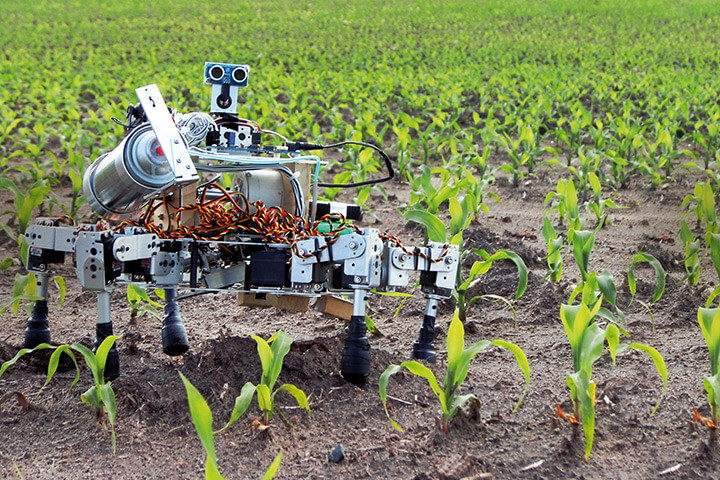
Modern farming is evolving from massive, single-purpose machinery toward agile, autonomous platforms. These robots execute precise digital “prescriptions” for row crops, ensuring every drop of water and gram of fertilizer is used exactly where it’s needed.
The Role of RTK in Crop Protection
In high-density planting, there is no room for “close enough.” RTK-GNSS provides the essential safety net for autonomous operations:
Zero-Damage Navigation: With 1 cm precision, robots stay locked onto their routes, weaving through tight rows without crushing delicate crops or compacting the root zone.
Variable Rate Application: Platforms adjust inputs in real time, applying the exact amount required for each specific spot instead of a “one-size-fits-all” approach.
Mobile Data Collection: These machines act as mobile labs, gathering real-time data on soil health and pest pressure to build smarter plans for future seasons.
By combining pinpoint RTK accuracy with versatile robotics, routine field tasks are transformed into a data-driven operation that protects your yield and significantly reduces operational costs.
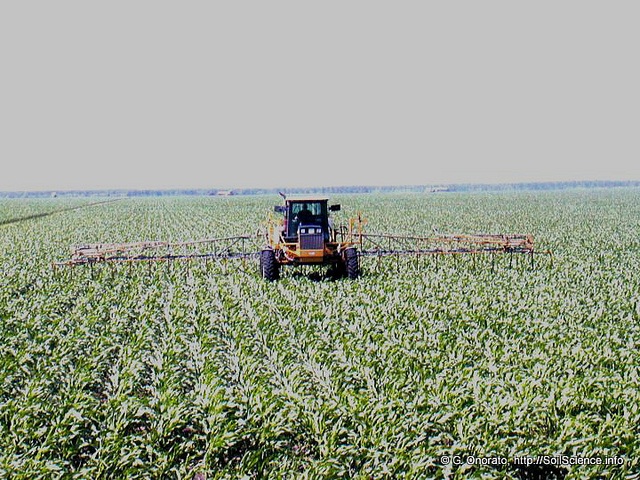
Modern farming is shifting from massive, single-purpose machinery toward nimble, self-driving platforms. These autonomous robots do more than move; they execute complex “prescriptions” for row crops, following precise digital paths to ensure that every drop of water and gram of fertilizer is utilized with zero waste.
The primary concern with automation is the “trample factor”—a robot is only an asset if it stays off the crop. The synergy between RTK-GNSS and onboard sensors creates the ultimate safety net:
Zero-Damage Navigation: With 1 cm accuracy, platforms lock onto their routes to weave through tight rows of delicate crops without crushing leaves or compacting root zones.
Variable Rate Application: These platforms adjust inputs on the fly, applying the exact amount of irrigation or fertilizer required for a specific spot instead of treating the entire field the same.
Live Data Harvesting: Acting as mobile laboratories, these machines collect real-time data on soil health and pest pressure, building a smarter, data-driven strategy for future seasons.
In high-density farming, “approximate” is not enough. By combining pinpoint RTK positioning with versatile robotics, routine chores are transformed into a precision operation that protects your yield while slashing overhead.
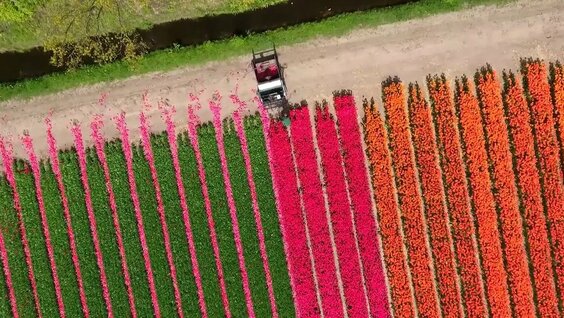
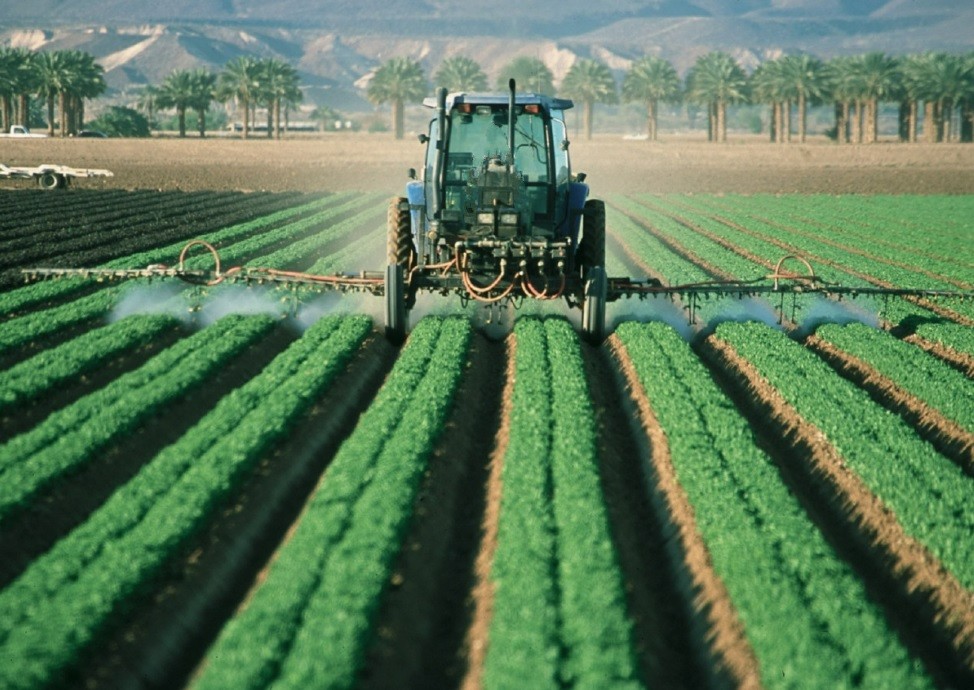
The days of blanket-spraying entire fields with heavy tractors are quickly coming to an end.
In both intensive crop farming and complex forestry, autonomous spraying robots and drones are taking over. Thanks to RTK-GNSS, these machines work with a level of precision that traditional methods simply can’t match — placing every drop exactly where it’s needed.
Whether you’re managing a large pine plantation or a specialized vegetable field, RTK-guided autonomous spraying turns a blunt, heavy tool into a precise instrument. It’s one of the smartest ways to improve efficiency while moving toward more sustainable, low-impact farming.
Read more:🔗 Precision Farming with Drone Sprayers: A Review of Auto Navigation and Vision-Based Optimization
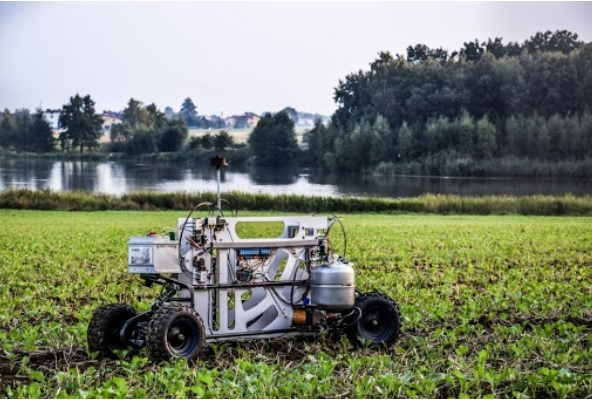
Precision agriculture is only as good as the quality of the data behind it. If your soil samples are off by just a few meters, your entire fertilization plan can be wrong from the start.
By using RTK technology, modern soil sampling systems now work with centimetre-level accuracy. Every soil core is taken at the exact right spot, consistently spaced according to your digital grid.
From Coordinates to Real Action
What makes these new systems truly autonomous is the combination of high-precision positioning and smart onboard sensors. Once the machine gets its target coordinates, it handles the rest:
In short, RTK turns soil sampling from a tiring, repetitive chore into a precise, reliable survey. It gives you the solid foundation you need for accurate variable-rate fertilization, so you’re not just guessing what’s happening underground — you’re actually measuring it properly.
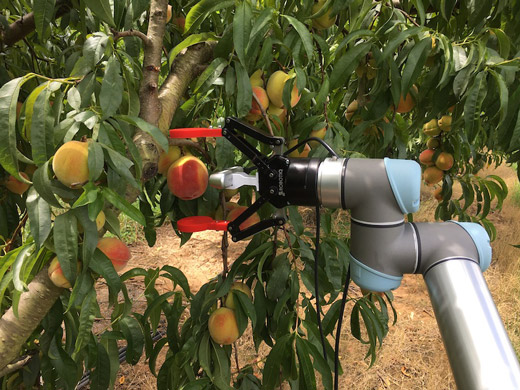
Getting the right fruit quality and a strong flower bud set is a tricky balancing act. Traditionally, thinning — removing excess fruit so the remaining ones can grow properly — has been a slow, labor-intensive job done by hand.
Now, a new generation of autonomous robots is stepping in, offering a much smarter and more efficient solution that saves both time and money.
To move safely through a dense peach orchard without damaging trees, a robot needs more than just a basic map — it needs real-time spatial awareness. These machines use two key technologies together:
In short, combining LiDAR and RTK turns a subjective, manual task into a repeatable, data-driven process. It’s one of the smartest ways to produce high-quality peaches while keeping your costs under control.
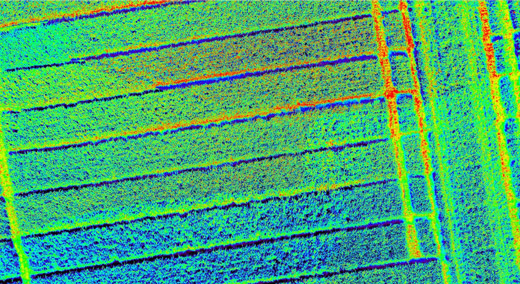
Traditional vegetation monitoring usually only gives you a general average of how the whole field is doing.
With RTK-GNSS integrated into drones and ground robots, we’re now able to look at things in much greater detail. Because the robot’s position is tracked with 1 cm accuracy, we can identify and monitor individual plants across the entire field.
This is what we call Per-Plant Intelligence. Instead of treating the field as one big block, you start managing millions of individual plants as separate assets.
The system combines super-accurate positioning with advanced multispectral or thermal sensors:
Why Per-Plant Management Matters
When you shift from field-level to plant-level monitoring, you stop wasting inputs on healthy areas and start giving precise help exactly where it’s needed.
This kind of detail, made possible by the rock-solid accuracy of RTK, is one of the best ways to unlock the full yield potential in high-intensity farming. It’s no longer just about managing a crop — it’s about understanding and supporting every single plant.
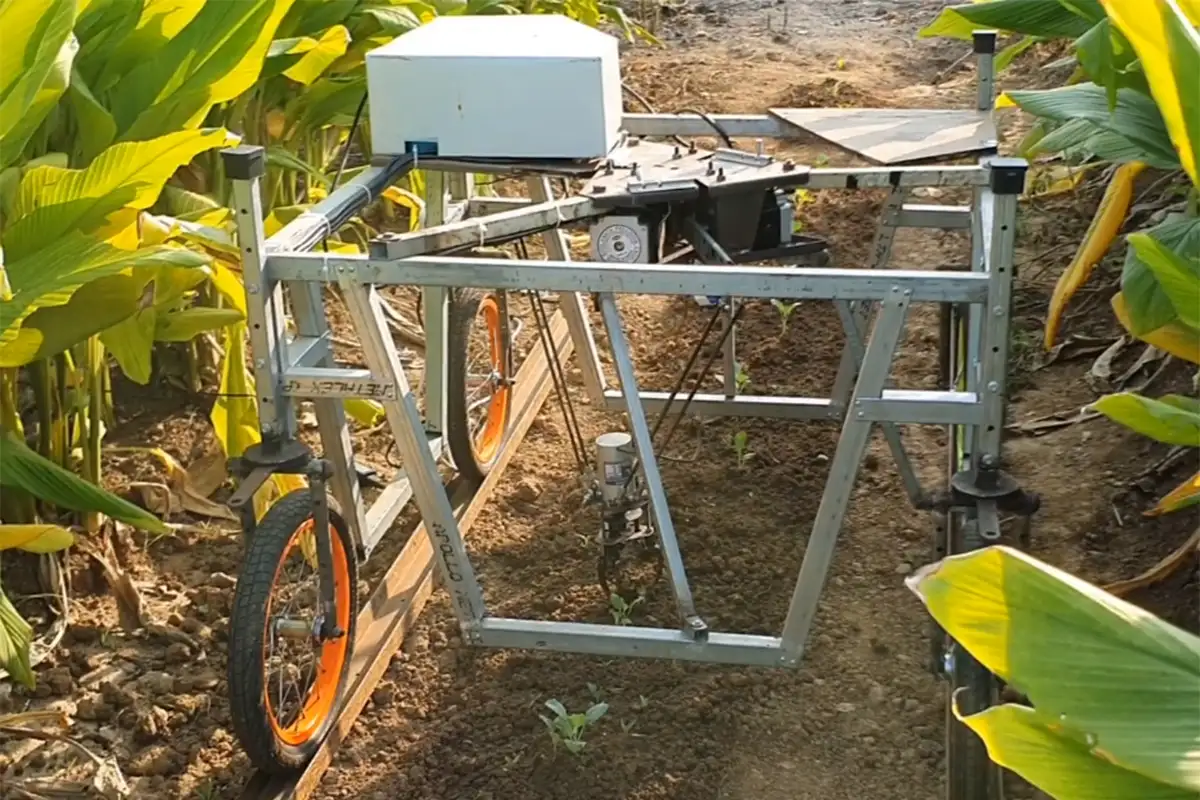
Weeding has always been one of the toughest and most labor-intensive jobs in vegetable farming. But autonomous robotic platforms are starting to change that, especially in spaced-row crops.
By combining GPS RTK with smart recognition algorithms, these robots can spot and remove weeds with a speed and precision that manual crews simply can’t match.
For high-value crops like lettuce, cabbage, fennel, and onions, there’s no room for mistakes. A robotic arm that’s off by just a few centimetres could damage the crop instead of the weed. That’s where RTK makes all the difference:
These platforms are designed for modern farms. They’re energy-efficient and connected wirelessly, so they can send real-time updates straight to your phone or computer. You can check progress, look at weed density maps, and adjust settings remotely from anywhere.
With labor getting harder to find and chemical regulations becoming stricter, RTK-based weeding robots are becoming a practical necessity. They protect your soil, cut labor costs dramatically, and make sure the only thing growing strongly in your rows… is your profit.
We made a survey to understand what might deter you from using RTK. Explore the main reasons with our comments: