
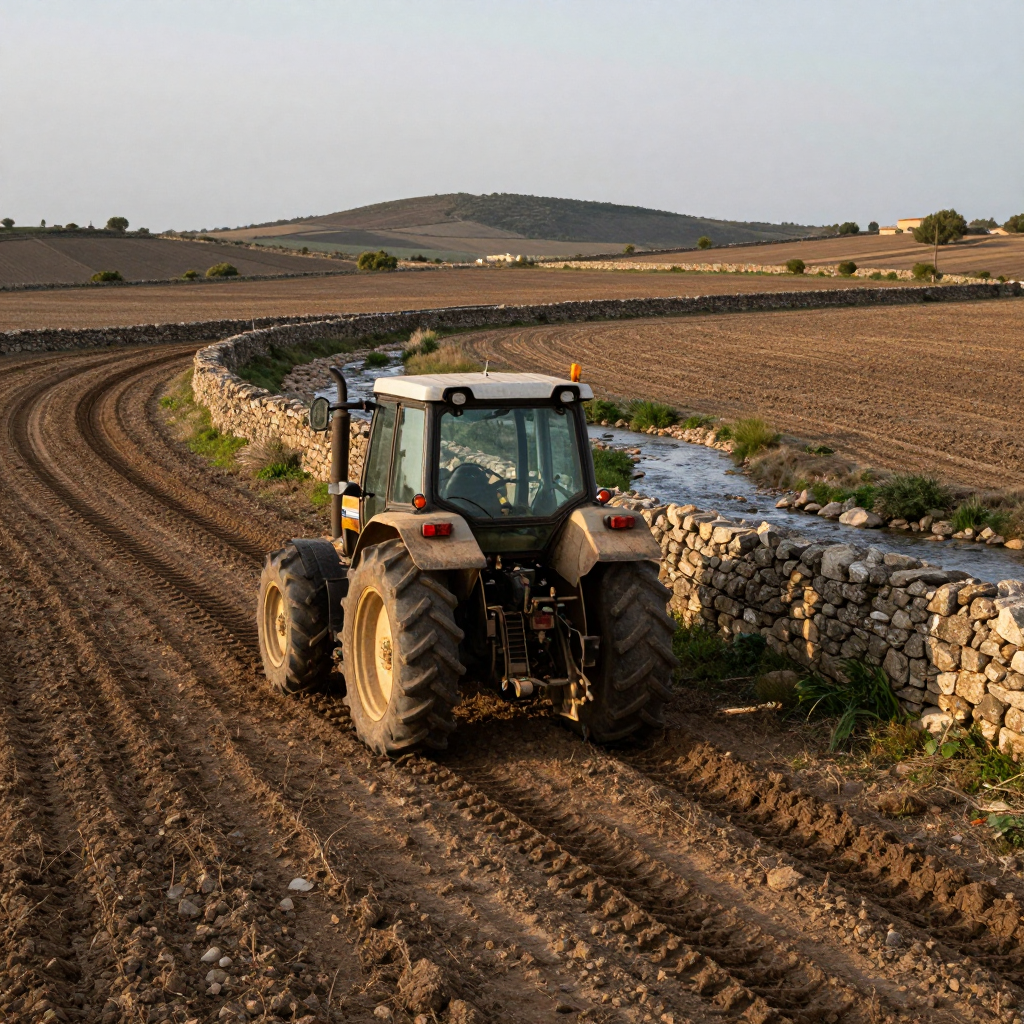
I’m not the kind of farmer who buys new tech just because it’s shiny. Usually, I wait until the neighbour has tested it for a couple of seasons and worked out the bugs. But when the local co-op started pushing RTK boundaries a few years back, I figured I’d give it a go on a few fields. Just to see.
Honestly? Some of the benefits I expected. Some I didn’t. And a few took a couple of seasons to really notice.
The First Thing You Notice Is the Quiet
That sounds strange, I know. But the first time I took the tractor into our most awkward field—the one that bends around the torrente and has those narrow terraces left over from years ago—the autosteer just… knew where to go. No beeping. No over-corrections. No creeping into the rough ground at the edge.
I remember sitting there thinking, “Is this it?” And then I realised I’d been clenching my shoulders for twenty years without noticing. That field had always been a fight. Suddenly, it wasn’t.
Then You Forget About the USB Stick Drama
Look, this is embarrassing to admit, but I’ve lost more data to dying USB sticks than to actual hard drive failures. There was one season where I must have redrawn the same boundary three times because the little plastic bastard decided to corrupt itself.
Now? I draw a line on the tablet, and my nephew has it on his screen before I’ve even parked the tractor. He’s got the old Massey with a second-hand GPS screen, and it just works. No driving back to the yard. No shouting over the phone trying to describe where the line should go. It’s boring, actually. Which is exactly what you want.
The Old Tractor Didn’t Get Left Out
We’ve got this ancient Ebro that my dad refuses to sell. It’s mostly used for odd jobs now, dragging a small trailer or running the fertilizer spreader on the steep bits. I honestly thought the RTK boundaries would be useless for it.
Turns out, you can export a shapefile and load it into almost anything. So the old girl gets the same inch-perfect lines as the new tractor. My dad pretends not to care, but I caught him checking the spread pattern last spring. Not a single grain wasted on the ditch bank. He didn’t say anything, but he didn’t have to.
The Money Bit Took Me By Surprise
I’d read all the brochures about reducing overlap and saving inputs. Sounded like marketing talk. But then I did the math at the end of the first year.
It wasn’t one big saving. It was a hundred little ones. Less seed spilled on the headlands. Less chemical sprayed on ground that wasn’t mine. Less diesel used because I wasn’t doing extra passes to “make sure.” It added up to enough to take the family out for a proper meal a few times. And in this job, that’s real money.
The Torrent Edge Thing Was Accidental
We’ve got a stretch of the torrent that runs through our lower fields. It’s not a big river, but it’s there. And every year, you’d try to stay back from the edge, but when you’re tired and it’s dusty, you creep forward a bit. We all do it.
With the boundaries set right, you can put a buffer in. The sprayer just stops. No thinking. No judgement calls at midnight. And yeah, that means less stuff ends up in the water. I didn’t do it for the environment, if I’m honest. I did it because it’s one less thing to worry about. But the result’s the same.
The Real Win Is the End of the Day
The biggest change, the one nobody sells you on, is what it feels like at the end of a long day.
When you’re on hour fourteen and your brain is foggy, and you’re still going because the weather window is closing, the last thing you need is doubt. Doubt about where the boundary is. Doubt about whether you’re wasting seed. Doubt about tomorrow’s arguments with the neighbour.
With the boundaries done right, you don’t have that doubt. You just drive. The machine handles the lines. You handle the tractor. And when you finally shut it down and walk to the house, you’re tired, but you’re not wound up. You can actually sleep.
That’s not in any brochure. But it’s real.