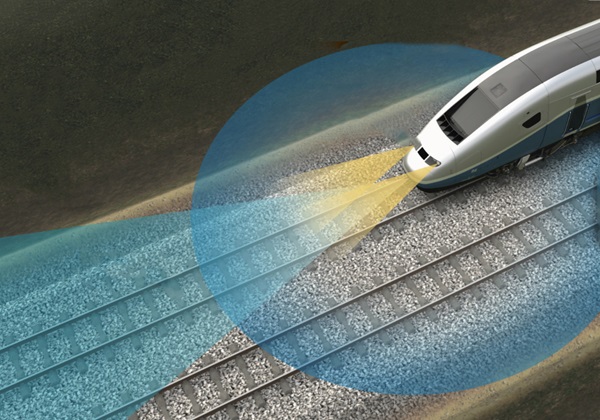
Railway infrastructure is moving rapidly toward full automation. To achieve this, rolling stock, track-laying machinery, and monitoring systems require a level of precision that traditional signaling cannot always provide. GNSS/RTK technology is the key enabler for the next generation of intelligent rail.
The role of high-precision data in modern rail:
Real-Time Kinematics for Trains: Implementation of intelligent systems requires continuous, accurate data on a train’s position, velocity, and heading. Centimeter-level accuracy ensures that the digital twin of the network matches the physical reality of the rolling stock.
Automated Track Laying: Precision-guided machinery uses RTK to ensure tracks are laid with absolute geometric accuracy, reducing long-term maintenance costs and improving ride quality.
Autonomous Surveying & Scanning: Real-time monitoring and track scanning systems detect structural shifts or obstacles, ensuring operational safety without the need for manual inspections that disrupt schedules.
Efficiency & Safety: Accurate positioning allows for tighter “headways” (the distance between trains), increasing track capacity and energy efficiency while maintaining the highest safety standards.
By integrating Precision-GNSS into railway networks, operators can transition from traditional fixed-block signaling to flexible, high-capacity, and fully automated operations.
Modern railway construction demands extreme accuracy to ensure safety and longevity, especially for high-speed lines. RTK technology significantly speeds up critical operations by providing real-time, centimeter-level guidance for machinery and engineering teams.
How RTK precision optimizes construction workflows:
Tamping & Track Renewal: RTK allows tamping machines to identify precisely where the track needs to be lifted or shifted, ensuring the ballast and rails are perfectly aligned according to the design specifications.
Slab Track Adjustment: During the complex process of slab track installation, RTK provides the necessary measurements both before and after concrete pours. This ensures that the final position of the track remains within strict tolerance levels.
Reduced Human Error: By providing real-time digital guidance directly to operators, the reliance on manual surveying is reduced, minimizing the risk of costly errors and rework.
Operational Speed: Construction phases that previously took days can be completed more rapidly, as RTK eliminates the need for constant pauses to re-measure the track’s geometry manually.
By implementing Precision-GNSS, railway engineers can move from traditional manual methods to a high-speed, digitally-verified construction process.
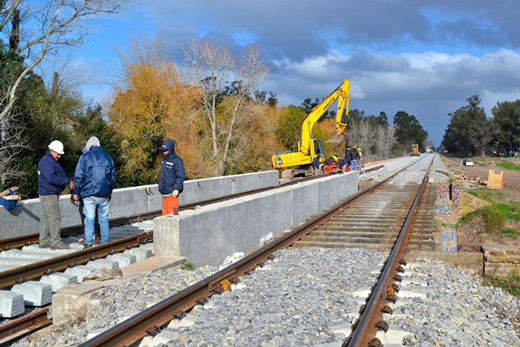
Railway track measurement systems integrated with RTK technology are transforming maintenance from a reactive process into a high-precision digital operation. By providing instantaneous feedback, these systems ensure that infrastructure remains within strict safety tolerances.
The impact of RTK-integrated maintenance:
Live Adjustment Data: For slab track construction, RTK receivers display deviations from the desired position in real-time. This allows engineers to make immediate corrections before or after concrete pours, ensuring the track is perfectly aligned.
Streamlined Operations: Tasks such as tamping and track renewal are simplified, as the system provides a digital reference that replaces traditional, slower surveying methods.
Bridge & Asset Monitoring: RTK is not limited to the tracks. Receivers installed on railway bridges monitor for deformation caused by environmental factors like floods, heavy storms, or thermal expansion.
Real-Time Structural Alerts: These systems provide immediate data on structural shifts, allowing operators to detect potential failures before they compromise the safety of the line.
By utilizing Precision-GNSS, rail operators can maintain their assets with greater accuracy, lower costs, and significantly enhanced safety for both infrastructure and passengers.
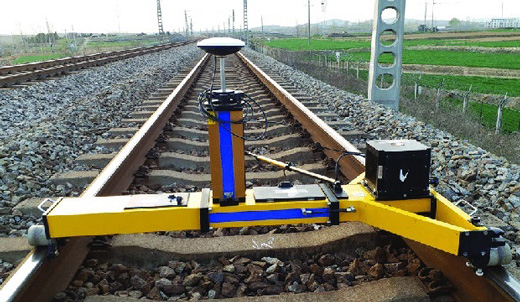
Maintaining the geometric integrity of a railway network requires constant, high-precision monitoring. By integrating GNSS RTK with specialized surveying platforms, operators can capture a comprehensive digital twin of the track and its surroundings.
Methods for high-precision rail surveying:
Track Geometry Trolleys: These lightweight, affordable platforms allow for the rapid recording of essential parameters including gauge, twist, super-elevation, and horizontal/lateral versine. RTK ensures every measurement is tied to an exact coordinate, creating a detailed condition report that serves as the blueprint for maintenance.
Locomotive-Mounted Platforms: For high-speed or large-scale mapping, surveying and scanning systems can be mounted directly on wagons or locomotives. These platforms use LiDAR and RTK to map infrastructure in real-time while moving at operational speeds.
Clearance & Obstacle Detection: Scanning platforms are vital for monitoring “structure gauges.” They detect vegetation encroachments, verify bridge clearances, and assess infrastructure limits to ensure the safe passage of specialized or oversized loads.
Data-Driven Maintenance: The fusion of scanning data and precise positioning allows for predictive maintenance, identifying minor track shifts before they become safety hazards.
By utilizing Precision-GNSS, railway authorities can replace manual inspections with automated, high-accuracy digital surveys, improving both network reliability and operational safety.
While infrastructure engineering requires millimeter precision, effective fleet management for trains often relies on a balance between high accuracy and cost-efficiency. GNSS/RTK technology can be scaled to provide the exact level of localization needed for operational oversight.
The advantages of optimized GNSS positioning for fleets:
Appropriate Accuracy: Given the physical dimensions of rolling stock, an accuracy of 1–2 meters is often the ideal “sweet spot.” This provides enough precision to identify which track a train is on without the overhead of centimeter-level RTK corrections.
Cost-Effective Deployment: By utilizing high-quality GNSS receivers without full RTK correction networks, operators can implement widespread fleet localization, speed detection, and timing at a significantly lower cost.
Resilience in Remote Areas: Modern receivers are designed to maintain reliable positioning even in areas with limited connectivity or where base stations are unavailable, ensuring constant visibility of the fleet across the entire network.
Operational Intelligence: Real-time data on train velocity and position allows for better scheduling, improved energy management, and enhanced passenger information systems.
By selecting the right level of Precision-GNSS technology, railway operators can achieve a comprehensive view of their entire fleet, improving efficiency without unnecessary infrastructure investment.
The integration of RTK-based systems represents a significant leap forward in railway safety. By providing real-time, high-precision positioning data, these systems act as a critical layer of protection, helping to eliminate the risk of collisions between rolling stock.
How Precision-GNSS enhances rail safety:
Real-Time Spatial Awareness: RTK technology provides the exact location of every train on the network. This high-precision data allows centralized control systems to maintain safe distances between vehicles with far greater accuracy than traditional track circuits.
Sensor Fusion: By integrating RTK data with onboard sensors (such as LiDAR or Radar), trains can develop a comprehensive understanding of their environment, identifying potential hazards or unauthorized track occupancy.
Automated Emergency Braking (AEB): High-accuracy velocity and position data enable the implementation of automated braking systems. If a potential collision is detected, the system can intervene to reduce speed or stop the train, effectively mitigating human error.
Intelligent Control Systems: Precision positioning is the backbone of “moving block” signaling, where safe zones move with the train rather than being tied to fixed sections of track, increasing both safety and track capacity.
By utilizing Precision-GNSS, railway operators can transition toward a more proactive safety model, ensuring that every journey is protected by the most accurate positioning data available.